

In most cases when a client asks us if they need to submit a Disavow file to Google, THEY DO NOT NEED IT, and it will have no effect on their visibility.
Over my more than 20 years in the field of SEO, this has been one of the most frequently asked questions by my clients and students. The answer, like nearly everything in SEO, should be ‘It depends.’ However, when it comes to disavowing links or not, we can conduct certain assessments to determine whether it’s advisable and whether it could positively impact search engine visibility.
Since I prefer a practical approach and don’t want you to wade through lengthy text to gain clarity, I’m going to provide you with clear guidelines that have consistently worked for me. I’ve NEVER witnessed a negative impact on my clients’ visibility, and, when necessary, an improvement in their visibility has been observed. As you are aware, in the realm of SEO, you can never attribute a single factor as the sole cause of a drop or rise in visibility. But if a client has been experiencing a prolonged decline and a single change results in a rapid upturn, we must have done something right. I think so 😉
What is a Disavow file?
First of all, in case you’ve stumbled upon this article and are not entirely sure what I’m referring to, let me provide a brief explanation of what a Disavow file is and its purpose.
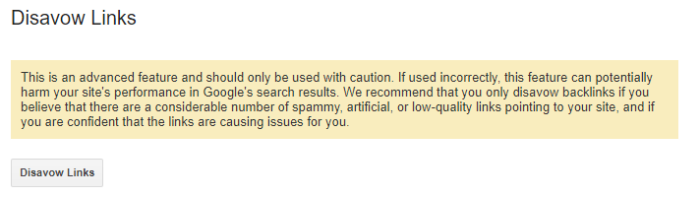
And before I explain it to you, I want to caution you that Google itself recommends using it very cautiously because, if used incorrectly, it could have a negative impact on your rankings.
I’m going to provide you with fundamental information because Google provides all the necessary details. Here, you will discover not only explanations of intriguing aspects but also how critical this matter is emphasized.

A Disavow file is simply a .txt file that we submit to Google using a free feature it offers. With this file, we can specify websites that are linking to our project but that we essentially do not wish to be associated with. As I mentioned earlier, exercise caution with this feature. You will notice that Google emphasizes this aspect.
Does disavowing links have any impact?
At this point, I always find myself asking the same question: If the Disavow had no effect or if they didn’t take it into account, would they notify you in this manner?
Furthermore, and perhaps contributing to the confusion, you can come across numerous publications where John Mueller himself advises us not to place excessive importance on spammy or random links but instead to prioritize more significant matters, like training for an Ironman 😉
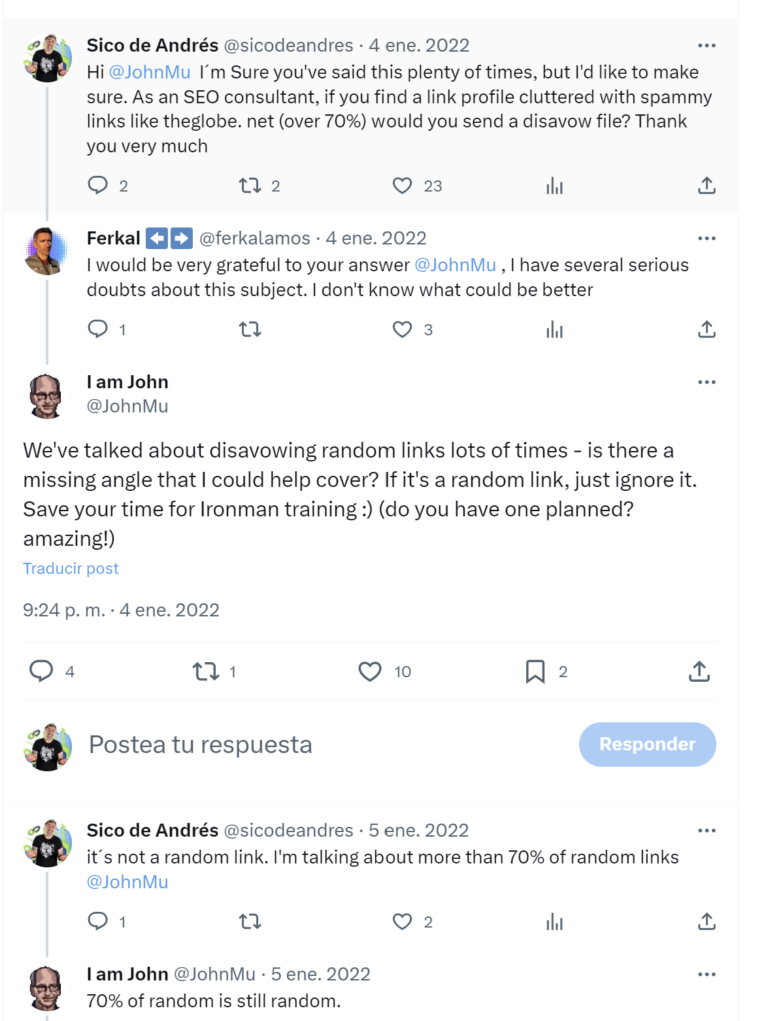
From my perspective, John is ABSOLUTELY CORRECT. As I delve deeper into this article, in the majority of situations where an agency or SEO believes that their issue of declining visibility can be resolved by disavowing spammy links, the reality is quite different. There are many factors that could be impacting your rankings, including your competitors simply outperforming you.
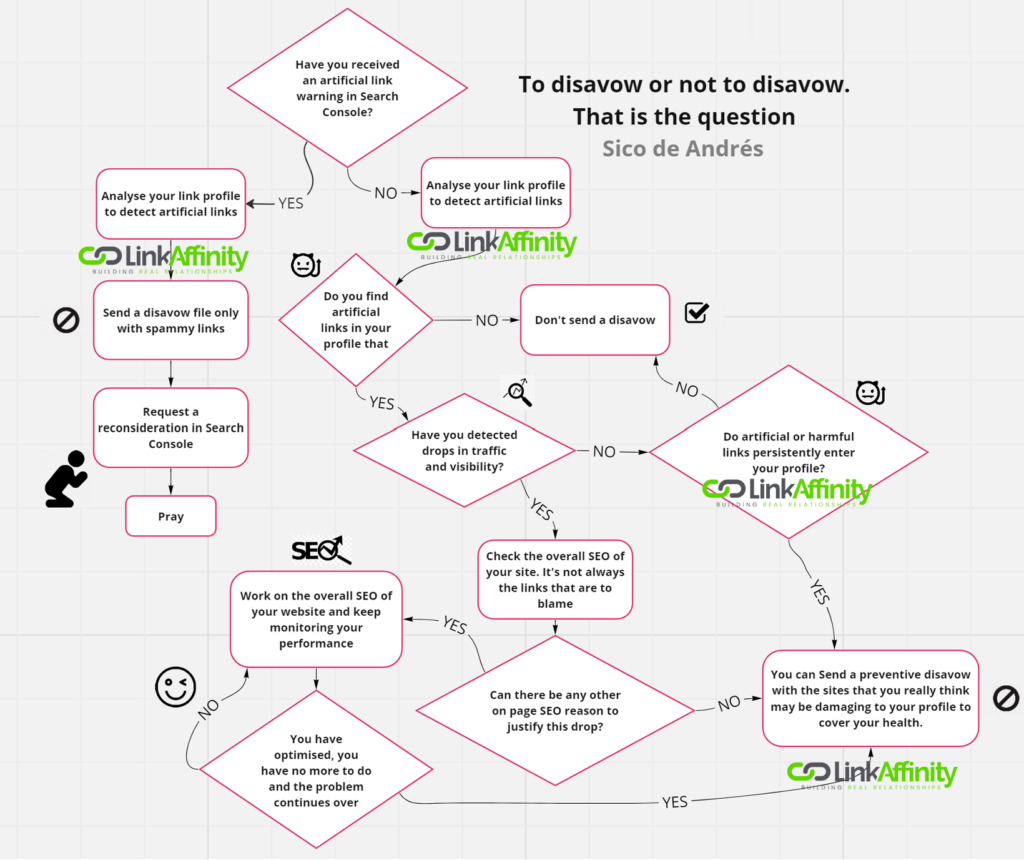
Therefore, I am going to provide you with some guidelines, which, while they may not be the absolute best, are the ones I’ve been using for many years to gauge whether submitting a disavow will be effective or not. I can assure you that considering these indicators will never harm your efforts.
Google wants naturalness and with Link Affinity you can measure it
At Link Affinity, we use ‘Naturalness‘ as a key metric when assessing the necessity of link disavowal.
This metric aims to establish a natural balance by considering mathematical authority, semantics, and the risk factors associated with sites linking to us. ‘Naturalness’ identifies artificial linking patterns but, like Google, does not penalize for random spam. Therefore, it will not flag low naturalness in your profile for having unrelated, random links. Our focus is on detecting link building strategies that rely on the creation of artificial links. Consequently, even if your site has high authority, your naturalness score may be low.
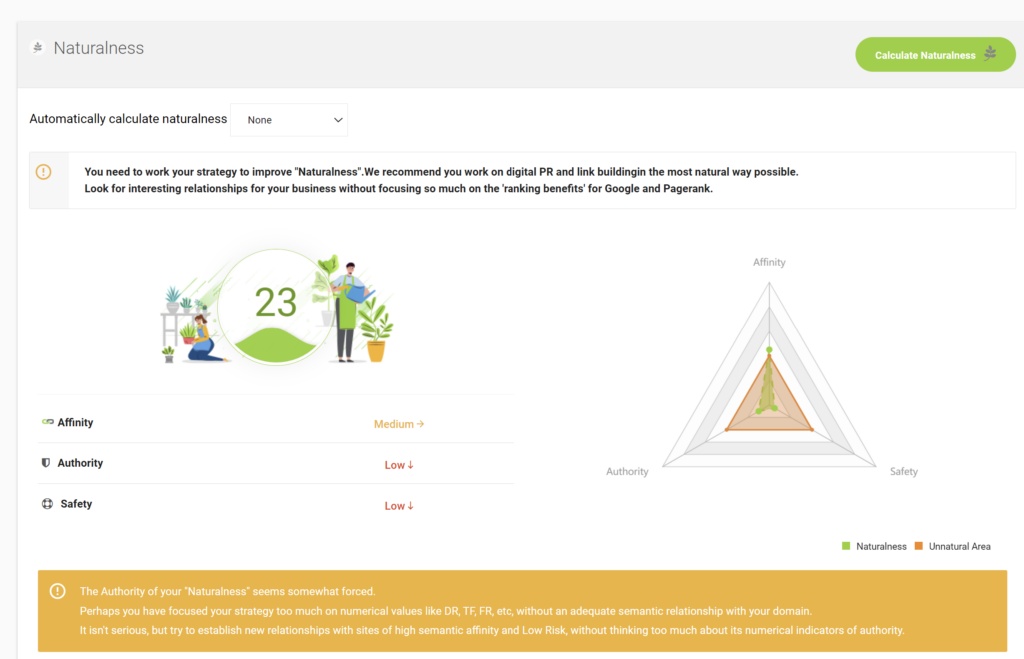
If your ‘Naturalness’ score is below 40, and you have followed the steps outlined in the process that suggest sending a disavow might be beneficial, all you need to do is go to the ‘Spammy links’ section in the Management phase and generate the file using the Google Disavow tool.
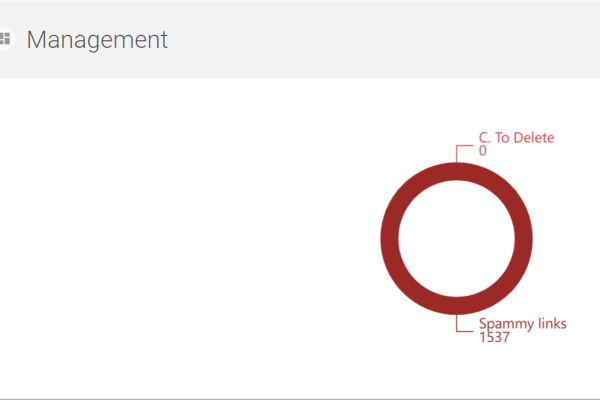
Once you’re in, you will find a list of websites that have been identified as ‘Link Spam,’ accompanied by specific indicators that explain why they received this classification.
I recommend reviewing this list before generating the disavow file. This will ensure that you only disavow sites that could potentially harm your rankings. After reviewing the list, you can generate the file by clicking the button shown in the image below.
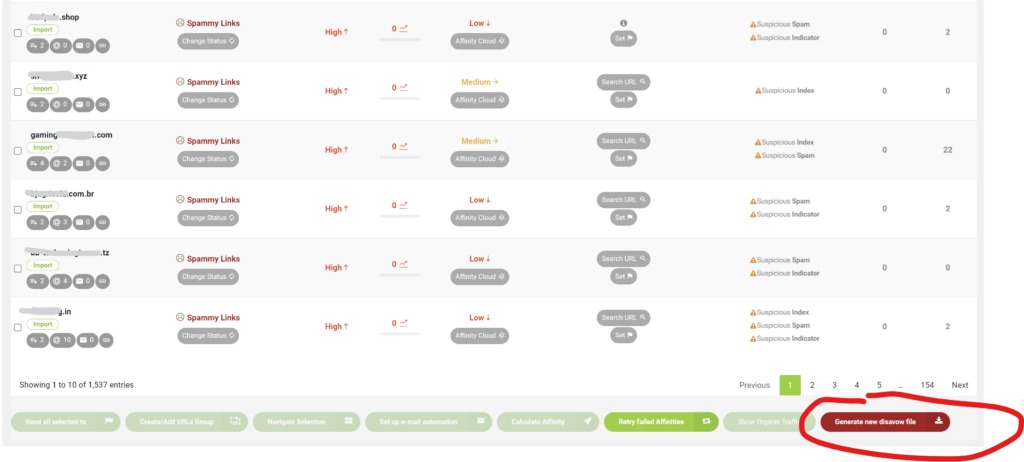
You simply submit it to Google. In Link Affinity, you’ll notice that these sites transition to the ‘Disavowed’ status. In this manner, you maintain ongoing control over what you’ve submitted, and, most importantly, you can monitor periodically new spam entries into your profile.
Some final tips
Remember everything I mentioned at the beginning of this article. In the majority of cases, sending a disavow file is unnecessary and will not produce any results. Examine the diagram closely I’ve provided; it can assist you in making an informed decision.